
Drug and Agriculture: The Trap of Legitimacy Behind the FARC Drug Trade
The Revolutionary Armed Forces of Colombia (hereinafter referred to as FARC) is the oldest insurgent organization in the world, having fought in the jungles and mountains of Colombia for nearly half a century. It is a Marxist-Leninist revolutionary organization and the largest insurgent group in Latin America. In the decade following the end of the Cold War, its size and military strength in fact continued to grow. During this period, it controlled large rural areas of Colombia, especially in the eastern and southern regions of the country.
During the ten-year period of violence (1948–1958), thousands of peasants were displaced due to military attacks. After resettling, they began to form self-defense organizations under the encouragement of the Colombian Communist Party. Under the leadership of Manuel Marulanda Vélez, the peasants armed themselves in self-defense and established the “Southern Bloc” (Bloque Sur). In 1966, due to the support of the 10th National Congress of the Colombian Communist Party, the southern guerrilla organization decided to form the Revolutionary Armed Forces of Colombia, transforming the peasant armed movement into a guerrilla warfare movement. From then on, the peasant armed self-defense gained its political revolutionary character.
FARC effectively functioned as a governing authority in the areas it controlled. In this role, the guerrillas provided social services to the growing population and maintained law and order by implementing their own judicial system. At the same time, they promoted land reform programs, including advancing the development of agricultural cooperatives. Between 2002 and 2003, FARC dismantled ten large ranches in southern Meta. Smaller plots of land were distributed to self-sufficient farmers. These measures aimed not only to redistribute land from the rich to the poor, but also to lay the groundwork for transforming agricultural models, including preparing farmers to move away from dependence on coca.
As an organization rooted in the peasantry, it had already mentioned in the 1966 congress the need to unite with the working class (“to unite with the working class and all the working people in the long-term struggle to seize power… clearly establishing that the strategy of mobile guerrilla warfare is appropriate and just, but it is necessary to expand activities to new areas of the country”). But in Colombia, revolutionary armed violence was almost exclusively confined to rural areas—Bogotá was never aware.
By 2004, FARC had around 17,000 armed members, making it the largest and longest-lasting anti-government armed force in Latin America (over fifty years), controlling about 40% of the country’s territory, mainly jungles and mountainous regions. Even so, its hopes of entering the cities continued to be dashed—FARC never managed to step out of its rural bases, and its guerrilla warfare had almost no impact on cities like Bogotá, let alone shake the government. On the contrary, with the rampant drug trade, increased U.S. military intervention, and the strengthening of anti-narcotics forces, FARC’s strength declined, and its ideological commitment faltered. As a result, it entered peace talks with the government in 2016 and transformed into a legitimate political party. Ironically, the Colombian Communist Party, which once considered urban armed struggle unthinkable, criticized FARC after its disarmament for abandoning class struggle. In turn, FARC accused the Communist Party of consistently failing to support their rural struggle.
1. In the City
Overall, FARC failed to pose a serious threat or impact to the centralized state located in the capital city of Bogotá because it attempted to change society from the bottom up. In other words, the guerrillas largely ignored—or were unable to appeal to— more traditional avenues of societal change, such as elections and participation in existing state institutions. Instead, they worked at the community level in rural areas, waging their struggle outside the traditional structures of state power.
Of course, on this point, the issue of the Party comes first. Although the guerrillas were initiated by the Communist Party, the Party’s attitude toward the tactical and strategic guidance of guerrilla warfare was undoubtedly ambiguous. Not only for the guerrillas—for when the assassination of Gaitán sparked the Bogotá uprising (El Bogotazo), the Party’s long-standing wavering attitude and lack of enthusiasm for advancing the revolution were already evident.
Gaitán was a left-wing leader of the Colombian Liberal Party, known for his populist stance and opposition to oligarchy, and he enjoyed considerable prestige among the common people. In 1948, Gaitán was assassinated while attending the Pan-American Conference in Bogotá (a conference aimed at promoting cooperation among American countries). His death immediately triggered massive riots, historically known as the “Bogotá Event” (El Bogotazo). For three days, the public stormed government institutions, burned buildings, and looted stores; thousands died, and the government only restored order after deploying the military.
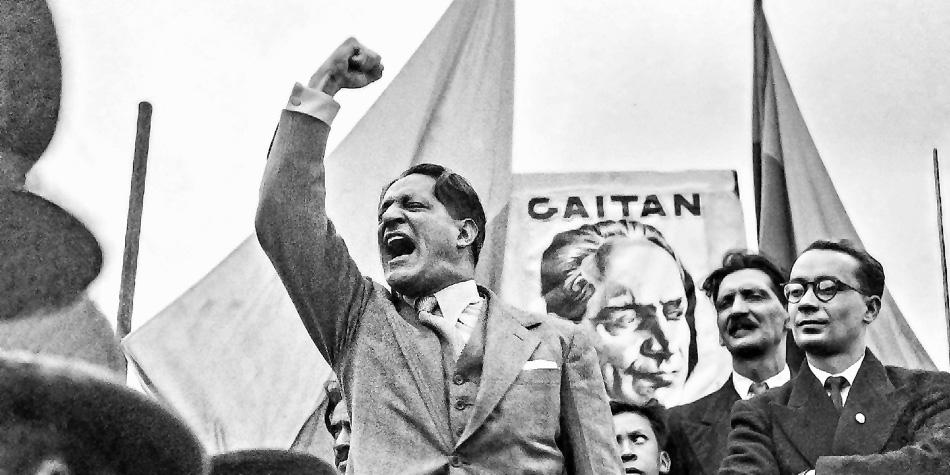
Britain and the United States naturally attributed the assassination and riots to an uprising led by “international communism.” But in reality, if there had truly been resolute leadership from the Communist Party behind the scenes, then during three consecutive days of mass rioting and anarchy, President Pérez could have been overthrown. But clearly the government did not fall.
The only direct political outcome of the event was the alliance between the Liberal and Conservative parties—in 1958, they began rotating the presidency every four years, jointly forming cabinets and equally dividing government positions. Under this political power-sharing, the Communist Party formed—or rather supported—a small group of peasant armed forces, based in remote rural and forest areas.
Thus, at the 10th Congress in 1966, the Colombian Communist Party felt it “could no longer stand by” and renamed the peasant armed movement as a guerrilla warfare movement, and FARC was officially established. This was because it needed to appear more radical than it actually was, to demonstrate its revolutionary nature. However, in truth, from the Communist Party’s perspective, guerrilla warfare may never have been the most important factor—the Party almost never treated guerrilla resistance as a legitimate form of struggle.
The Colombian Communist Party never stepped outside of Bogotá, and FARC correspondingly never entered the cities. As the military extension of the Party, FARC gradually became separate. While the Colombian Communist Party supported revolution, it increasingly leaned toward expanding influence through elections and parliamentary struggle, while FARC insisted on armed struggle as the core method. This contradiction intensified in the 1980s, when the Communist Party attempted to engage in electoral politics, but FARC believed the “peaceful path” could not resolve fundamental contradictions. In 1982, at its Seventh National Conference, FARC declared independence from the Communist Party and renamed itself the “Revolutionary Armed Forces of Colombia—People’s Army” (FARC-EP). This decision marked the formal split between the two, and FARC began independently formulating strategies, including expanding its drug trafficking network and strengthening military operations, becoming more radical in its stance. At the Eighth Conference (1993), the two organizations officially severed ties.
In the 1990s, the rift between FARC and many left-wing intellectuals in Colombian cities also deepened. Although the peasantry remained the main support base of the Revolutionary Armed Forces of Colombia, support from urban left-wing intellectuals was also important. However, the split with the mainly urban-based Colombian Communist Party, as well as the growing skepticism among urban leftist intellectuals about the legitimacy of armed struggle in the post-Soviet era, all indicated that the Revolutionary Armed Forces of Colombia had once again become an organization primarily based in rural areas.
In summary, the guerrillas’ failure to participate in conventional political activity at the national level ultimately led to their marginalization and political ineffectiveness. From the very beginning, the guerrillas chose to isolate themselves from the culture and politics of the cities, functioning as the Party’s military force in the countryside to accumulate strength and then return support to the cities. However, the guerrilla commanders never attempted to establish stable and systematic alliances with union members, university students, or cultural workers. Therefore, in what we call national politics, they have always remained weak and marginalized; but in some rural areas, they, like their paramilitary enemies, successfully built networks of support and sympathy.
2. In the Village
Compared to other Latin American guerrilla organizations of the 1960s and 1970s, FARC did not initially follow Che Guevara’s foco theory—the idea that small guerrilla units act as vanguards, creating the necessary conditions for revolution through armed struggle, which would then inspire the masses to rise up and overthrow the national government. This theory was adopted by most guerrilla movements in Latin America, including the Farabundo Martí National Liberation Front (FMLN) in El Salvador, the Sandinista National Liberation Front (FSLN) in Nicaragua, and the National Liberation Army (ELN) in Colombia. The leaders of these organizations were urban middle-class intellectuals, and leadership remained in the hands of university-educated vanguards from the cities.
However, the founders of FARC were not trying to act as revolutionary vanguards mobilizing peasants to participate in armed struggle, but were politically-conscious peasants themselves who formed the organization under existing conditions to protect themselves from state repression. They launched their own land reforms, established rural cooperatives, and created their own judicial systems. FARC patiently consolidated control over vast rural areas and assumed many responsibilities that should have been fulfilled by the state, such as providing healthcare, judicial services, and infrastructure development. It implemented a progressive income tax, from which most poor farmers were exempt. It also imposed a “tax for New Colombia” on the wealthy and businesses, regardless of where in Colombia they were located.
FARC’s taxation system essentially had two tiers: revenue from taxing drug production and trafficking in its controlled areas, and revenue from extortion and kidnapping of wealthy individuals and businesses under Law No. 002, both of which funded its military operations; at the same time, taxes collected from local businesses in FARC-controlled areas were handed over to community leaders to fund social, economic, and infrastructure projects.
In the 1990s, driven by FARC’s public works programs, infrastructure in many small towns across Colombia’s remote eastern and southern regions saw significant improvement. FARC built hundreds of miles of roads, connecting dozens of communities. While these engineering efforts clearly benefited the people, FARC still failed to earn the legitimacy it sought. Over time, it even lost its moral capital in the eyes of the left, due to its increasing involvement in the drug trade—this also opened the door for American denunciations of FARC as a “terrorist organization” and justified military intervention under the banner of anti-narcotics operations.
3. The Drug Trade
Colombia’s harsh economic conditions not only guaranteed FARC a constant stream of new recruits but also led more and more Colombians to migrate to rebel- controlled areas—especially in eastern and southern Colombia—where they lived under FARC rule. Given how many Colombians were living in poor conditions, it’s no surprise that the cocaine boom in the late 1970s triggered a wave of unemployed urbanites and landless farmers to migrate to FARC-controlled regions to grow coca.
Initially, FARC also banned the cultivation of coca and marijuana, considering them counter-revolutionary and in violation of the social contract with the people, viewing these illegal drugs as a disease of the elite. But once they realized that poor farmers—the very base of FARC’s support—had no other choice but to grow these crops, they changed their stance and began cooperating with drug traffickers, prompting the U.S. to send military forces to Colombia under the banner of combating “narco-terrorism.”
Not only conservative right-wing forces, but also much of the left criticized FARC’s involvement in the drug trade as eroding its revolutionary goals and straying from leftist principles. But the issue was not whether the drug trade was ideologically legitimate for a leftist organization—it was whether it could be avoided at all for a particular class.
The explosion of cocaine production in the 1980s affected nearly every aspect of Colombian society. By the late 1980s, drug traffickers had become the largest landowners in Colombia and had turned much of the country’s arable land into barren pastures. Yet every time a Colombian drug lord was taken down, newer, more efficient, and more discreet organizations would take their place. On top of this, Colombia’s neoliberal economic policies caused economic hardship. Paramilitary activity forced farmers to migrate to border regions, leading to further land concentration. In 1999, after nearly a decade of neoliberal reforms, Colombia experienced its worst year since the Great Depression—so bad that it provided the International Monetary Fund with the leverage to directly shape the implementation of neoliberalism. That year, the IMF issued a $2.7 billion loan, with structural adjustment conditions requiring Colombia to further open its economy, privatize public enterprises, and cut social spending—thus integrating into the U.S.-led new world economic order.
Subsequently, in 2000, the United States launched Plan Colombia, aimed at combating Colombia’s drug trade and insurgent groups. This marked a significant escalation in U.S. military intervention; almost overnight, U.S. aid to Colombia tripled. Plan Colombia was not just about fighting illegal drug trafficking—it became a mechanism for militarizing neoliberalism in Colombia. After all, the oil and mineral resources coveted by multinational corporations were mostly located in rural areas where FARC was active.
These factors collectively created favorable conditions for increased coca cultivation. Hundreds of thousands of Colombians moved from urban areas to remote colonies under FARC control to plant coca for survival. This shift had a major impact on the guerrillas, who found themselves compelled to support—or at least oversee—coca cultivation.
The processing of coca leaves into cocaine involves three main stages. The first stage, usually done by coca farmers themselves, involves harvesting and crushing the leaves, then mixing them with baking soda, gasoline, and other additives to form a brown coca paste, of which about 40% is pure cocaine. The farmers then sell the paste to processors, who mix it with sulfuric acid, potassium permanganate, and other chemicals to produce cocaine base. This mixture is drained and heated until it dries into a solid white compound, which is then broken into small white rocks. The resulting cocaine base contains about 90% pure cocaine. The third and final stage—usually carried out in large labs deep in the jungle—involves refining the base into 99% pure cocaine hydrochloride, or powdered cocaine.
FARC set a fixed price per kilo of coca paste for farmers and a higher price for processors (usually working for drug cartels). Farmers earned more and processors paid more than they would in areas controlled by paramilitaries. When FARC purchased coca paste from farmers and resold it at a higher price to processors, they made a profit, which helped fund their rebellion.
If farmers in FARC-controlled areas were found trying to sell coca paste to another broker, FARC would usually force them to leave the area as punishment. But such cases were rare—selling to FARC was more profitable, so farmers had little incentive to deal with other groups.
During the boom in coca cultivation, FARC and drug traffickers formed unstable alliances. FARC taxed traffickers and their drug operations, ensured that coca farmers were paid in cash rather than in bazuco (a drug), and also limited the amount of coca that farmers under its control could grow.
FARC provided land, technical assistance, and low-interest loans to help farmers transition from illegal crops to legal ones such as coffee, cassava, bananas, sugarcane, and livestock. They promoted the commercialization of these products as an alternative path to reduce farmers’ dependence on coca. But changing farmers’ behavior was a slow process—it wasn’t as simple as destroying the illegal crops and telling them to plant something else. Farmers needed to be educated on how to grow these crops, given tools, credit, and time so they could make a living and become a different kind of farmer.
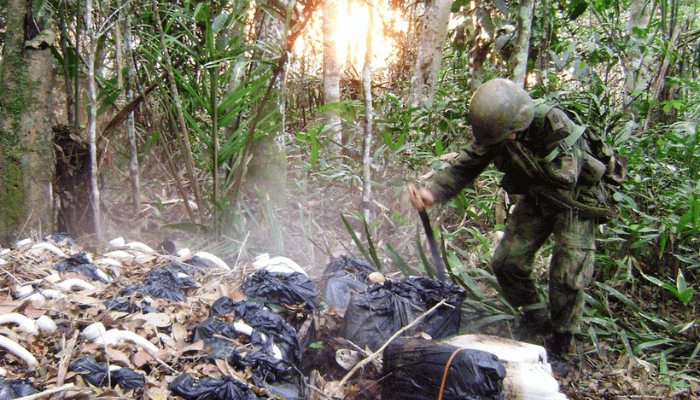
In contrast, the U.S. response to coca cultivation was Plan Colombia. Under this plan, U.S.-piloted spray aircraft, supported by U.S.-provided armed helicopters, regularly fumigated coca crops in southern and eastern Colombia, particularly in resource-rich Putumayo province. Hundreds of thousands of hectares were fumigated, destroying not only coca but also food crops, harming children’s health, and displacing thousands of families.
Ironically, this only further stimulated coca cultivation. After their land was fumigated, coca was often the first crop farmers chose to replant. Coca could be harvested four to five times a year and provided quick income, whereas some food crops took several seasons to yield their first harvest.
Plan Colombia was at least successful in terms of military intervention, but its anti-drug results were deeply ironic: hundreds of thousands of hectares of coca were destroyed, yet cocaine prices, purity, and supply in U.S. cities were unaffected. Despite failing to achieve its stated primary goals, both the Bush and Obama administrations continued implementing the plan.
As mentioned earlier, the issue is not whether the drug trade is ideologically legitimate for a leftist organization, but whether it is avoidable for a particular class—and if it is not, then what should be done?
As FARC stated:
“We know that farmers cultivate illegal crops out of necessity. This is specifically a socioeconomic issue. Because the government ignored them for years, they were forced to grow illegal crops. We have made it clear that we will not take food from the mouths of poor farmers. We will not leave them unemployed. They grow marijuana and coca leaves because they have no other work. This problem was caused by the economic model of the Colombian state, and it is the state that must solve it. We are enemies of the state, not its anti-narcotics police. The state must provide people with employment, honest work, and social justice to improve their lives.”
What we support has never been the outward form of a specific activity, but rather the class position and historical direction it carries. There is a dangerous kind of moral purism often present in leftist movements—a fetishization of “revolutionary purity” as an absolute standard of legitimacy and procedural justice, while ignoring the complex reality of class struggle. The criteria for judgment is not abstract moral decree, but whether the action serves the liberation of a class: does it help laborers cast off their chains, or forge stronger ones? Critiques of “illegality” that ignore class analysis ultimately become tools of ideology for defending the status quo. Abandoning the illusion of formal purity means returning to a proletarian standpoint.