
From SDS to DSA: The American New Left’s Dilemma and Way Forward
Evolution of the American Left: From Marginalization to DSA’s Rise
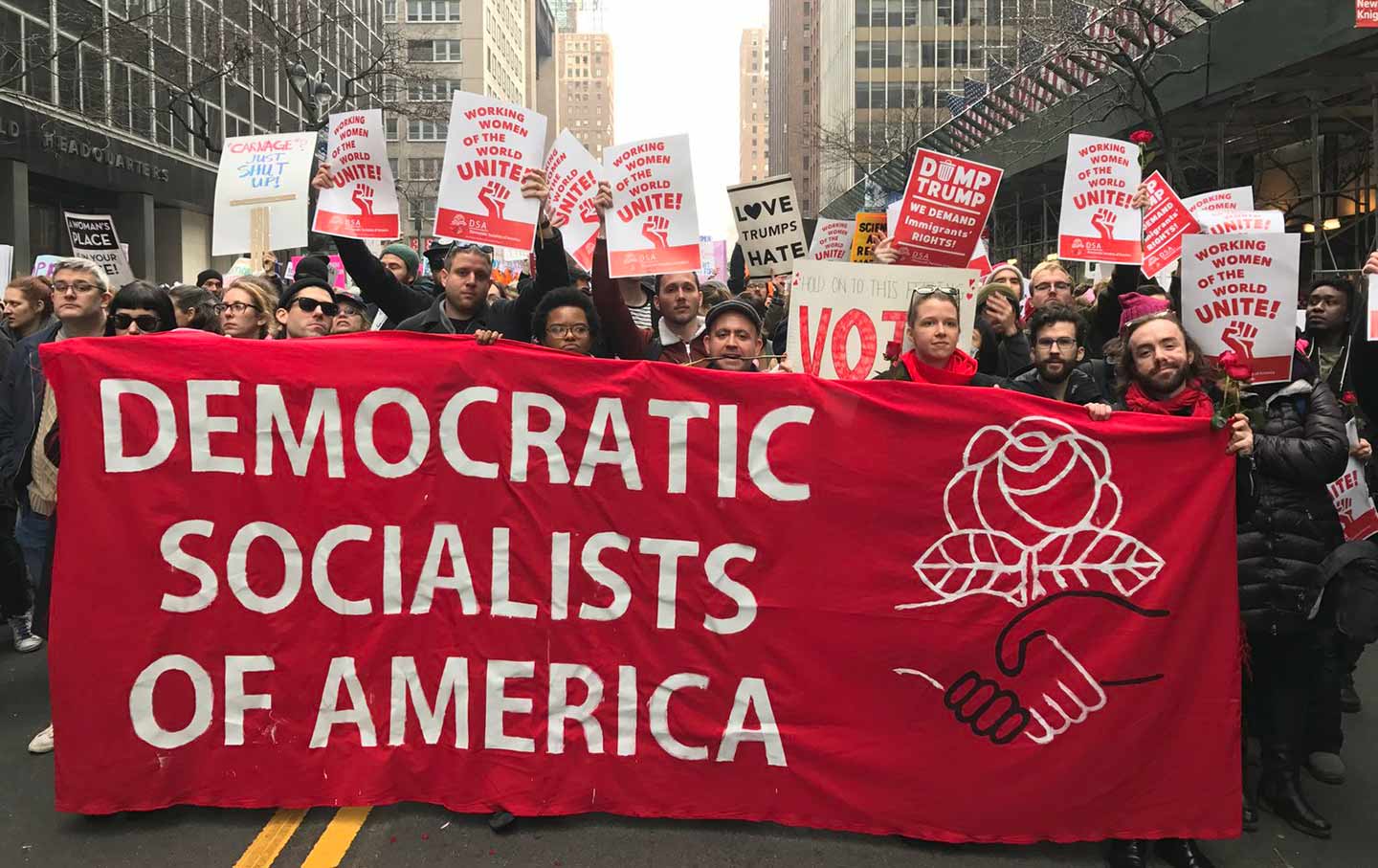
The American left-wing movement has undergone a complex evolution since the late 19th century, from early socialism to the New Left, and on to contemporary democratic socialism. Its developmental trajectory not only reflects shifts in U.S. socioeconomic and political structures but also reveals the ongoing challenges faced by left-wing organizations in strategy and organization. The Democratic Socialists of America (DSA), as one of the primary forces in the current broad U.S. left-wing landscape, achieved a transformation from a marginalized group to one with considerable organizational scale, thanks to Bernie Sanders’ participation in the 2016 and 2020 presidential campaigns and widespread dissatisfaction with the ills of capitalism. However, the DSA’s rapid rise has not obscured the flaws in its organizational model, which can be traced back to the erroneous structures of its predecessors---the Students for a Democratic Society (SDS) and the New American Movement (NAM). This article will trace the timeline of U.S. left-wing forces from the late 20th century to the present, deeply analyze how the DSA has inherited various historical legacies from the SDS and NAM, and, combined with the author’s observations in the U.S., offer some prospects for the future of American left-wing organizations.
###The SDS Era: New Left Core and Internal Fractures
In 1960, students across the U.S. founded the Students of a Democratic Society (SDS), and the party soon become the core force of the North American New Left in the last century. Based on the Port Huron Statement, it advocated participatory democracy, civil rights, anti-war (primarily the Vietnam War), and anti-capitalism, reaching a membership of 100,000 by 1968. However, the SDS quickly fell into internal factional struggles. The Weather Underground organization, represented by Bill Ayers, advocated for the terror of revolution. After the 1969 October “Days of Rage”---a large-scale street protest in Chicago against the Vietnam War and the Chicago Eight trial---was suppressed by police, the Weather Underground decided to fully transition into an underground terrorist group and renamed itself to distinguish from SDS. They established secret cells, with members dispersed across the country operating under false identities.
In 1970, the Weather Underground began a series of bombing attacks targeting government and corporate sites, typically carried out at night and preceded by media or phone warnings to avoid casualties. In March 1970, an accidental explosion occurred while the Weather Underground was manufacturing a bomb in a safe house in New York City’s Greenwich Village, killing three members (Ted Gold, Diana Oughton, and Terry Robbins) and destroying the building. This incident even seemed somewhat embarrassing and comical, exposing the Weather Underground’s actual lack of professional training, which forced them to adjust their image by emphasizing the avoidance of innocent casualties. In June of the same year, the Weather Underground placed a bomb at the New York City Police Headquarters, causing partial structural damage but no casualties. They warned police via anonymous phone calls to evacuate and later issued a statement claiming the action was in protest of police violence against Black people and anti-war activists. In August, they targeted a military facility in San Francisco, declaring the action a response to U.S. military atrocities in Vietnam. After each operation, the Weather Underground would release communiqués or report via mainstream media to articulate their political goals, attempting to stir public discontent with the Vietnam War, racism, and capitalism. However, these actions did not spark widespread mass movements; instead, mainstream media branded them as irrefutable proof that left-wing forces are equivalent to terrorist forces, leading to intensified scrutiny and severe contraction of space for other contemporary left-wing organizations. Ultimately, in 1974, the FBI’s COINTELPRO operation launched a massive manhunt against the Weather Underground. As the Vietnam War wound down and public support waned, members of the organization surrendered or were arrested one after another. After leaving a mess in their wake, figures like Bill Ayers and Bernardine Dohrn eventually reentered mainstream society, transforming into educators.
PLP’s Influence and the SDS Dissolution
The contemporaneous Progressive Labor Party (PLP) in the U.S. emphasized anti-parliamentarism. Within the SDS, the PLP attempted to promote a “Worker-Student Alliance,” influenced by the French May 1968 movement, aiming to fuse the student movement with the workers’ movement to create greater upheaval. However, the PLP’s dogmatism and its open support for the French Communist Party and the Vietnamese Communists led to conflicts with other SDS factions, particularly at the 1969 SDS national convention, where the PLP’s attempt to control the organization’s direction sparked fierce disputes, ultimately causing the SDS’s dissolution in 1969 and leaving a vacuum in North American New Left organization.
The NAM Era: Attempts at Grassroots Revival
In 1971, the New American Movement (NAM) was founded to fill this void, established by former SDS members like Terry Evelyn Cook and Michael Lerner. Through organizing study groups in universities, publications (such as Movin’ On), and community volunteer work, it spread socialist ideas, intending to combine Marxism, feminism, and the American progressive tradition to advocate political democracy and social equality. However, NAM’s formal membership never exceeded 10,000, with its main activities confined to areas near universities, making it difficult to take root in grassroots communities. In 1972, the SDS successor organization SPA split into the Social Democrats, USA (SDUSA), the Democratic Socialist Organizing Committee (DSOC), and the Socialist Party USA (SPUSA). Among them, the SDUSA, in its manifesto on U.S.-Soviet relations, completely betrayed communism and the Soviet-bloc military-industrial complex, incorporating socialism as a “more realistic” political system parallel to or even superior to communism. The DSOC was absorbed by prominent U.S. Catholic activist Michael Harrington, with its political activities trending conservative amid the increasingly tense Cold War atmosphere. In 1973, NAM and DSOC began merger talks, formally merging into the DSA in 1982 to integrate NAM’s tradition of on-the-ground activism with DSOC’s experience in parliamentary politics.
DSA’s Revival and Parliamentary Gains
In the 1980s, the Reagan administration’s neoliberal policies further marginalized the DSA heading into the new millennium, but the 2008 financial crisis and the 2011 Occupy Wall Street movement provided opportunities for its revival. In 2013, Kshama Sawant emerged as a so-called socialist councilmember in Seattle elections, demonstrating the DSA’s potential to mobilize local cities. In 2016, Bernie Sanders ran in the Democratic presidential primaries, promoting his brand of “democratic socialism,” which boosted DSA membership from 6,000 registered members to 25,000; by 2017, it further grew to 56,000, with the national convention attracting 1,000 delegates. In 2018, DSA-endorsed candidates like Alexandria Ocasio-Cortez (AOC) won New York Democratic primaries, elevating the organization’s influence. In 2020, Sanders ran again, and though his campaign ended on April 8, its impact continued to drive DSA membership growth. It can be said that the DSA’s membership surge is inseparable from its high-profile entry into bourgeois parliamentary struggles as a symbol of legitimate left-wing politics in the post-millennial era.
However, the increased political exposure from participating in parliamentary politics has not helped the DSA address the structural problems inherited from the SDS era; the most obvious is the decentralized structure from the SDS period, which grants local chapters high autonomy while lacking national coordination mechanisms, leading to fragmented political actions. For example, chapters in some regions have recently focused mainly on Free Palestine anti-war marches, while those in others emphasize civil rights movements for specific minority groups, with inconsistent regional strategies undermining overall influence. The loose structure of the SDS era was historically proven unable to withstand FBI COINTELPRO infiltration and suppression, fostering growing distrust among SDS local branches toward unified inter-campus consensus. This persists in the DSA, which maintains a decentralized organizational structure, with local chapters (such as Knoxville and New York) enjoying high autonomy and the National Political Committee (NPC) primarily handling coordination. The organization adheres to a left-wing “big tent” strategy, allowing coexistence of Democratic leftists, social democrats, anarchists, and LGBTQ+ rights movements, among other ideologies. This makes it difficult to disseminate unified, orderly grassroots movement strategies from a stable central body to local branches, resulting in a persistent lack of cohesive action guidelines. Consequently, local chapters often focus on addressing locally generated demands stemming from policy flaws: the Knoxville chapter concentrates on opposing the privatization of public services, arising from the city’s outsourcing of wastewater treatment to Veolia, which triggered a water crisis; the New York chapter emphasizes housing justice due to mismanagement by NYCHA and notorious slumlord eviction lawsuits.
Core Dilemmas: Reactivity and Media Dependence
North American left-wing groups universally face a core structural dilemma: a lack of strategic direction in broad propaganda combined with insufficient tactical mobilization and layout capacity in grassroots communities, jointly leading to significant passiveness. This passiveness manifests as groups setting agendas not based on possessed leverages---long-term internal programs or grassroots action capabilities---but instead chasing hot topics amplified and dominated by mainstream (bourgeois) media. This following carries a degree of blind activism, causing the shaping of group programs and specific actions to be effectively led by externally set, ever-shifting issues (from BLM to the current Save LA). More critically, the heat and visibility of these issues are highly dependent on and constrained by the operational logic of North America’s bourgeois-dominated media mechanisms. To gain attention on these issues and attempt to win over segments of the grassroots masses, left-wing groups often must passively embed their organizational demands and discourse into the framing set by mainstream media, compromising to fit. While this strategy may yield short-term mobilization effects, in the long run, it creates a complex and hard-to-escape vicious cycle: strategic absence and weak grassroots tactics cause left-wing organizations’ action mobilization to rely on media hotspots. This reliance on media focuses forces assimilation of their own discourse framing, which in turn solidifies strategic absence and damages deeper tactical foundations. As a result, grassroots mobilization as a quantitative manifestation of tactics is gradually weakened, ultimately causing a thorough conflation and confusion between the quantity and quality that left-wing groups can control and inspire in tactics and strategy. This cycle is essentially a positive feedback loop, continuously eroding the potential for left-wing movements to build independent political discourse.
Theoretical-Practice Disconnect and Parliamentary Limitations
On the other hand, there is a significant disconnect between the SDS’s theory and practice: while the Port Huron Statement proposed ideals of participatory democracy, it failed to outline feasible implementation paths, directly leading to organizational splits---radicals turned to violence due to suppressed demands, while moderates, forced to expend energy distancing themselves from radicals, had to abandon focus on grassroots communities. Both sides relied on short-term actions like high-profile protests and marches, making it difficult to sustain grassroots influence. Although the contemporary DSA generally recognizes the necessity of parliamentary struggle and chooses to support infiltrative Democratic candidates (such as AOC, Lee J. Carter, and Zohran Mamdani) to amplify its voice, yet in the context of two-party competition and single-member districts, to avoid splitting votes, these so-called socialist candidates must also adhere to the Democratic Party’s issue framing and agenda, thereby losing political autonomy. When a self-proclaimed socialist party differs from the U.S. Democratic Party only in numerical policy indicators (such as welfare subsidy amounts or tax thresholds) and fails to lay down networks of action to subvert capitalist structures, the legitimacy of its “socialist” essence faces serious questioning.
Path Deviations, Grassroots Gaps, and Prospects for Renewal
First, the DSA’s dilemmas profoundly reveal the fundamental path deviation of the First World left. Its core issue lies in an excessive obsession with the narrow alley of parliamentary politics, nearly self-imposed bondage. Admittedly, in the First World context, left-wing participation in parliamentary struggles has realistic logic, but this does not mean abandoning the vitality that a revolutionary party should unleash outside parliament, especially in grassroots soil. The DSA’s near-total blank slate in deep grassroots cultivation is an absolute fatal wound. Although it has intervened in housing issue organizations like the GBTU tenant coalition, these are essentially still a mode of union---relying on “positioning” at key nodes in the capitalist production chain to secure rights, akin to “begging from the system.” Its true incapacity lies in ceding space for grassroots community organization and management to government agencies and NGOs with bipartisan backgrounds, showing weakness at the most critical level of reorganizing production and daily life. Today’s American grassroots have been woven into an airtight network of capitalistic reforms: food aid relies on the Feeding America system supported by Democrats and its array of Food Banks; medical assurance is segmented into insurers, community clinics, large hospitals, and nonprofit think tanks, with the latter (such as the Center for Law and Social Policy) serving as gloves for Democrats’ selective welfare policies; skills training for grassroots blue-collar workers is dominated by joint efforts from industry associations like ACCSC and community colleges, where union-issued training certificates provide huge advantages in job applications, paving a smooth path for local “good family” youth. In this landscape, the North American left’s desire to re-interwine with the grassroots seems trapped in a suffocating dilemma.
But vitality lies precisely in the cracks of the system. In the service and construction industries on the East and West Coasts, the ‘New Money’ aka emerging bourgeoisie, while desperately compressing welfare costs, increasingly relies on the internal rapid recruitment and mobilization capabilities brought by self-organized networks of undocumented immigrants from various ethnicities. This is the key breakthrough for North American progressive forces. The focus must be on a thorough shift in work priorities---from the old union path of exhausting efforts to secure a few percentage points of reformist welfare for First World “good family” kids---to radically providing free Spanish-English language training and basic skills such as driving for the “down-and-out” arrivals from the Third World. Thus, tearing open a gap in this shadow to plant roots. We can see that promising organizations like PSL and NDLON have already begun acting: Los Angeles’ CARECEN and New York’s Worker Justice Center offer ESL courses for Latino day laborers; some NDLON branches have even successfully obtained OSHA certification training qualifications, genuinely enhancing immigrant workers’ dignity and development space. This is the direction.
Second, the North American left severely overlooks the strategic necessity of resource transfer. Practices in the Third World (such as Venezuela’s PSUV and Nicaragua’s Sandinista Front) have clearly proven that even with scarce resources, revolution can be leveraged through deep grassroots cultivation and international solidarity. Cuba once nurtured revolutionary sparks in Asia, Africa, and Latin America with medical aid; Bolivia’s MAS movement leveraged global left networks to advance indigenous and worker rights. In contrast, the DSA’s anti-imperialist activities mostly devolve into symbolic spectacle marches, with no substantial resource output to Third World revolutions. More tragically, the First World New Left, mired in the quagmire of parliamentary politics, consumes its human resources and energy in repetitive vote-pulling for politicians, yet skimps on “transfusing blood” to Third World struggles. Moreover, in such an immigrant country as the U.S., they always face the dilemma of choosing between the rights of local workers with “legal” status and undocumented migrant workers.
Should resources be tilted toward “legal” “good family” kids, or prioritized to protect those “illegal” “down-and-out” souls discarded after their home economies were sucked dry, arriving like avenging ghosts? The answer must be direct: the North American left’s grassroots resources must tilt with bone-deep awareness toward migrant workers from the Third World, resolutely opposing all ICE arrests of “illegal” migrant workers, seizing the gray zone carved out under the Democrats’ progressive facade, necessarily using portions of bourgeois legal rights as weapons to combat potential bad habits and mindsets in local migrant communities, and quickly establishing self-corrective order within undocumented migrant communities. We must remain vigilant: this so-called “immigrant country” is the “top one vampire” sucking off the rest of the world’s lifeblood, and its legitimacy of “guarding its own food bowl” is, in revolutionaries’ eyes, nothing but a vampire’s license. The North American left’s mission is to root in minority ethnic and undocumented immigrant communities, leveraging America’s economic position and international trade channels to become a “reverse flow pipeline” returning technology and production-organizing-processes to their Third World home countries, helping reclaim the sucked “blood,” transforming into a reverse-flowing “back-transfusion” precisely injected into the drained veins of their homelands. This is no half-hearted charity but must carry a quasi-militarized solemnity: reclaiming from the oppressor the blood that was plundered, the vitality that was exploited. From current observations, the model of the Philippine organization in the U.S., Anakbayan, is worth referencing: it maintains close ties with multiple local Philippine organizations, including the League of Filipino Students (LFS), College Editors’ Guild of the Philippines, and National Union of Students of the Philippines. These groups jointly participated in activities like the 2001 “People Power II” movement against then-President Joseph Estrada’s policies. Anakbayan also collaborates with urban poor organizations (like KADAMAY), participating in the 2017 “Occupy Pandi” movement, fundraising and gathering supplies overseas to help poor families occupy vacant government housing units. The First World left needs to find its own internationalist responsibility---not armchair slogan-shouting from afar, not indulging in identity politics games, but becoming a real resource fulcrum.
In summary, the dilemmas of the DSA and indeed the entire contemporary American New Left stem from being ensnared in two giant nets: one is the decentralized organizational net left by the SDS, dissipating forces in local fragmentation; the other is the net of issue-dominated parliamentary politics, turning strategy into passive acquiescence. The former prevents deep grassroots rooting, while the latter dooms it to inability to shake the capitalist discourse system. So-called “socialist” practice, if it merely bargains with Democrats or Republicans over welfare quantities or briefly dances on the crest of media hotspots, is essentially just a part where capitalism is “stuck”---a part where capitalism monopolizes grassroots security capabilities to prolong its life. For the First World, the path to breakthrough always lies in how to make the vampires spit out the blood they’ve sucked in. Otherwise, no matter how membership numbers inflate, it will ultimately be just another “revolutionary game” clamoring on paper.