
The Western European Left’s Unfinished Struggle Under Structural Oppression
In the latter half of the 20th century, the Italian Communist Party (PCI) pivoted towards parliamentary struggle under the grip of Cold War divisions and the U.S. Marshall Plan. This strategic shift not only preserved the flame of proletarian resistance but propelled the PCI to become the most robust and resonant communist force in Western Europe. At its zenith, the party constituted a decisive bloc in the parliament. PCI stood as the unyielding pillar of the Western Europe’s left-wing movements, and anti-fascist vigilance.
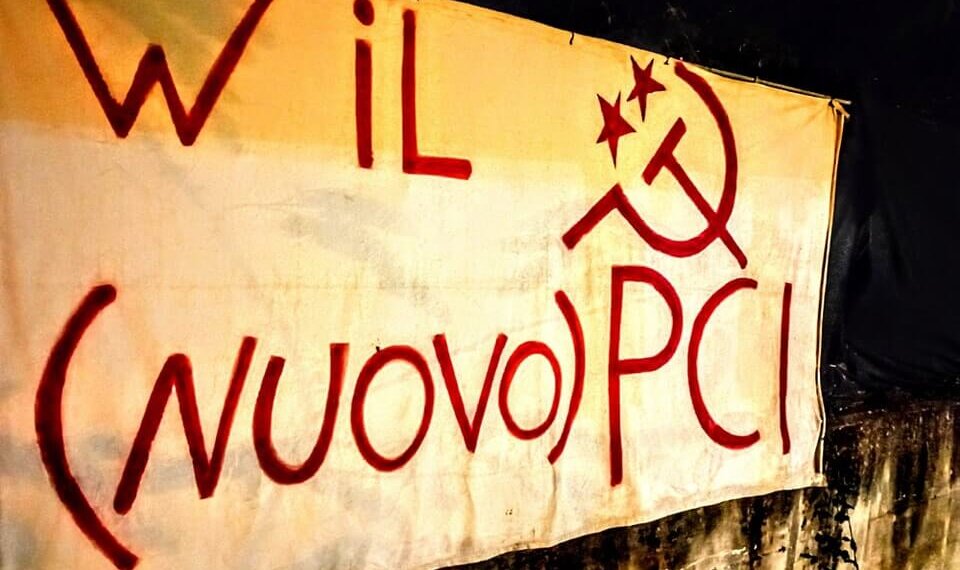
In June 2016, Bologna, the New Italian Communist Party (Nuovo Partito Comunista Italiano) was established. NPCI was forged by the Party of Italian Communists (PdCI) and members from the Communist Refoundation Party (PRC). Mauro Alboresi was elected as the first general secretary. This movement seeks to bring back the core symbols and histroical continuity of communism, reviving the political mission of the Italian Communist Party (PCI).
The founding of the New PCI (Nuovo Partito Comunista Italiano) heralded the return of PCI as an historical symbol. However, the New PCI scarcely secures meaningful breakthroughs in elections, mass mobilization, and institutional negotiations:
There is a lack of capacities of nationwide organization and mobilization. Its youth organization almost halted, breaking the generational inheritance. Besides, the New PCI remains disconnected from contemporary left-wing social movements, such as fighting for climate justice or against xenophobic oppression. The activities of the New PCI are largely confined to commemorative gatherings and symbolic expressions.
In practice, the New PCI has not undertaken the task of communism in the 21st-century Western Europe. Instead, its organization and tactics gradually reduced into a symbolic existence. It is more of a loose cluster of independent student groups or localized social networks rather than a cohesive force. The party falls short of public support and political impact. The development of the New PCI confronts a dual crisis: the weakness of strategic planning and organizational mobilization, and the fragmented, decreasing social influence, which is common for contemporary Western European left-wing movements.
To further analyse this situation, the author will use the following sections to trace the historical arc of the Italian Communist Party (PCI) in the 20^th^ century. Through the observations of history and reality, envisioning the future for the left wing of Western Europeans.
The Italian Communist Party (PCI) was the bigger post-World War II communist party in Western Europe’s. From the 1960s, it was the world’s largest opposition communist party. Social democratic or socialist parties dominated the left of most countries of industrial democracy. In contrast, the PCI leads the leftist force in Italy. For decades, it constitutes the majority in opposition parties, ranking as the nation’s second-largest party. From 1963, PCI secured no less than 25% of the vote, peaking above 30% in mid-to-late 1970s; the statistics almost rivals the dominant Christian Democratic Party (DC).
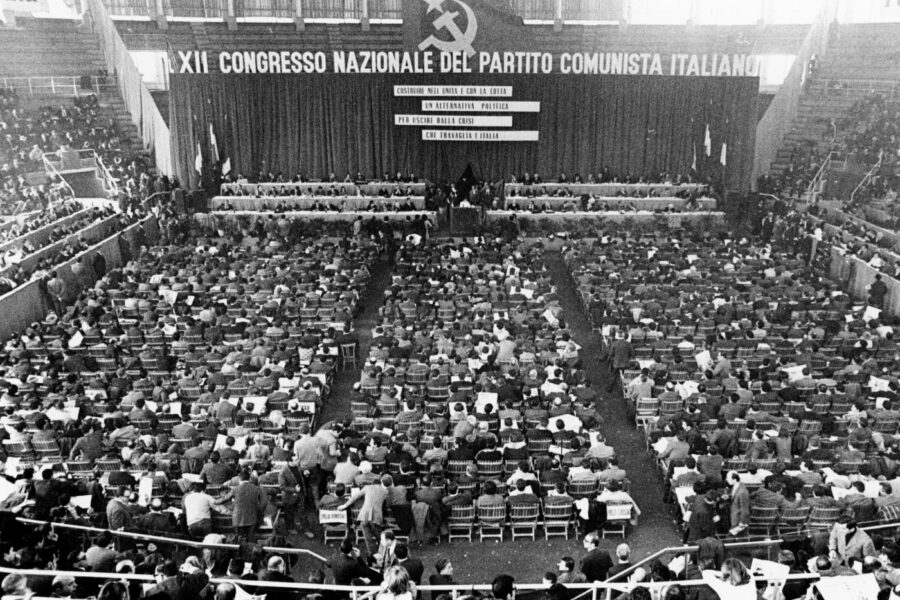
Its membership oscillated between 1.5 and 1.6 million with a 2-million peak. More notably in its post-war pursuit, the PCI appeared at the threshold of entering the government during 1976—198. It seized 34.4% of the votes in the 1976 parliamentary elections. This is such a narrow gap from the DC’s 38.7%. Despite electoral accomplishments, the PCI’s aspiration to state power remained unfulfilled in the following historical practices.
In 1921, the PCI split from the left wing of the Italian Socialist Party. It actively participates in the underground resistance against Nazi occupation during World War II. The number of sacrifices of PCI surpassed any other anti-fascist group in Italy. In the postwar political reconfiguration, the PCI swiftly grips its political autonomy by leveraging its sacrifices and organizational experience during the resistance. This grounds its rapid growth into a revolutionary party, widely supported by leftist and progressive forces.
Before its shift into the parliament, PCI was profoundly influenced by Antonio Gramsci. Gramsci’s Prison Notebooks, written during his imprisonment, critically examined the trajectory of the Russian October Revolution. The book also incisively exposed the mechanisms that through which the ruling class in capitalist Western Europe societies, sucessfully consolidates ideological dominance. He argued that a “war of movement”---rapid, frontal attacks on state power---was unfeasible in Western Europe. Instead, revolution should turn to the “war of position,” namely protracted struggles to contest the hegemony within cultural domains such as education, religion, and media. This theory underscored that the proletariat’s historical mission extends beyond seizing state power; it necessitates a sustained subversion of bourgeois cultural hegemony to establish the working class’s own historical leadership.
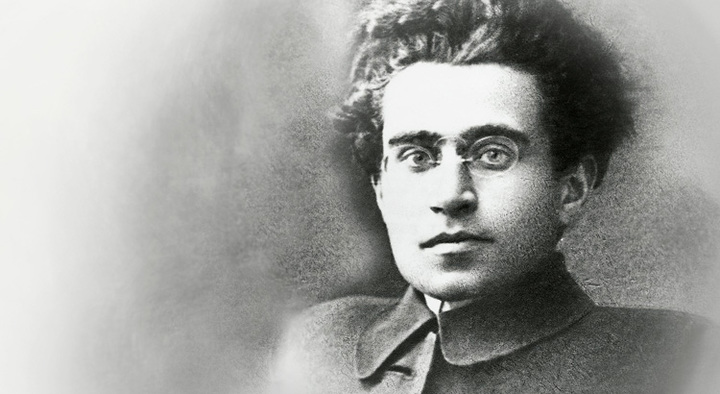
Antonio Gramsci’s theory of cultural hegemony does not endorse a parliamentary struggle. Rather than legitimizing reformation within the system, Gramsci advocated a revolutionary cultural and educational strategy. He proposes the creation of a new historical bloc through the praxis of organic intellectuals and the self-organization of the masses. This bloc could restructure Italy’s social fabric, which has been shaped by the rural-urban divide, premodern clan and guild relations, and partially modernized labor relations. This strategy centers on a struggle over the outcomes of social labor reproduction. It is an activation and reshaping of localized societal networks with organic intellectuals as agents. In contrast, parliamentary engagement, a component of this broader struggle, is not a defining or essential condition for the role of organic intellectuals. Consequently, reducing Gramsci’s thought to a justification for parliamentary tactics constitutes a structural misreading of its revolutionary core.
Upon Palmiro Togliatti’s return to Italy in 1944 to lead PCI, Gramsci’s revolutionary theory underwent a strategic re-interpretation. Marked by the “Salerno Turn” (la svolta di Salerno), Togliatti advocated for a national unity government, renounced efforts to overthrow the monarchy, and deferred radical transformation of the social order, emphasizing a gradual path to socialism through legal means. At first sight, this shift was ostensibly driven by the need to avert civil war and align with Soviet international strategy. In reality, it charted a new institutional course: trading legitimacy for political survival and incrementalism for state tolerance. Thereby, it effectively foreclosed the possibility of violent revolution as a historical option, reorienting the PCI toward an accommodation within the capitalist framework.
Between 1944 and 1947, PCI underwent a fundamental strategic shift, transitioning from a revolutionary force to a parliamentary party. The party explicitly adopted the stance that “revolution cannot be forcibly launched,” actively avoiding direct confrontation with the state apparatus. Under this directive, PCI dismantled local partisan units, including the “Garibaldi Brigades,” and relinquished workers’ armed control over several cities and industrial zones. This process closed the only window for seizing state power through mass armed struggle in the postwar period. It also marked the PCI’s full integration into the republican system, redirecting its political focus toward parliamentary struggle and the workers’ movement. Togliatti’s pragmatic reinterpretation of Gramsci’s thought transformed the concept of “war of position” from a revolutionary strategy against cultural hegemony into a rhetorical camouflage for struggles within the system. This further entrenches the party’s institutionalization and tendency toward compromise within the capitalist order.
In comparison, during the same period, the Chinese Communist Party (CCP) adhered to the revolutionary maxim that “political power grows out of the barrel of a gun.” It rejects reformist integration in favor of a revolutionary strategy that culminated in the establishment of a socialist state. In this context, cultural struggle remained subordinate to class struggle and the fight for state power, rather than an independent ideological compromise. From this perspective, Togliatti’s tactics diverged from Gramsci’s revolutionary vision. Furthermore, it reflected a broader historical logic among Western European left-wing parties in the early Cold War— a gradual decline of revolutionary capacity, as they transformed into technocratic appendages of the capitalist state apparatus.
In the 1948 Italian general election, the Italian Communist Party (PCI) made its first attempt to challenge for state power with immense postwar public support. Nonetheless, it was defeated under U.S. intervention, aggressive mobilization by the Catholic Church, and the counter-pull of the Marshall Plan. This failure marks PCI’s turn into an opposition party within the Italian political system, despite its robust political legitimacy and roots among the working class. Constrained by the “red line” of the Cold War situation, a systemic blockade against communist governanc, the PCI eschewed armed struggle or underground activity. Instead, it articulated the “Italian road to socialism” (via italiana al socialismo), a triadic strategy rooted in gradual revolution, parliamentary struggle, and cultural hegemony.
Extensively influenced by Gramsci’s thought, this approach prioritized mass organization, trade unions, and local governance as vehicles for advancing the historical process toward socialism. During this phase, PCI emerged as an institutionalized, mass-based force, yet perpetually barred from true ruling power. It embodied a state of “inclusive marginalization”, integrated into the system yet excluded from the core of state authority, unable to grasp “hegemonic power” (potere egemonico). As a systemic “exception,” the PCI persisted on the margins, sourounded by the very institutions it sought to transform.
Despite its exclusion from state power, PCI wielded considerable political influence and reshaped Italian social and class dynamics in advancing labor protections and mobilizing working-class forces. Many scholars characterize this period of PCI as an opposition party as a “state within a state,” reflecting its multifaceted social influence:
-
Labor Negotiations and Union Framework
The PCI closely allies with the CGIL (Italian General Confederation ofLabour). They organized collective action among workers in the industrial north, especially in Turin, Milan, and Genoa. From the 1950s to the 1970s, CGIL led large-scale strikes that demanded shorter working hours, higher wages, and collective bargaining rights. Through municipal governance, PCI facilitated localized “labor code” protections. Its pioneered in policies on housing, healthcare, and transport subsidies in areas like Bologna and Emilia-Romagna. The 1969 Workers’ Statute (Statuto dei Lavoratori), a landmark in national labor legislation, was partly driven by pressure from the PCI, embedding workers’ rights in the national legislation.
-
Land Reform and Cooperative Model
The PCI led agricultural cooperatives (cooperative agricole) incentral-northern rural regions, notably Emilia-Romagna. The cooperatives promoted collective ownership of productive resources, profit redistribution, and agricultural modernization. These exceeded mere economic functions, providing healthcare, education, and infrastructure, thus serving as foundational units of rural social welfare. Although land reform in the south was limited during the 1950s, the PCI actively supported tenant farmers’ organizations and land struggles, exerting political pressure that influenced later land redistribution policies.
-
Cultural and Social Services Penetration
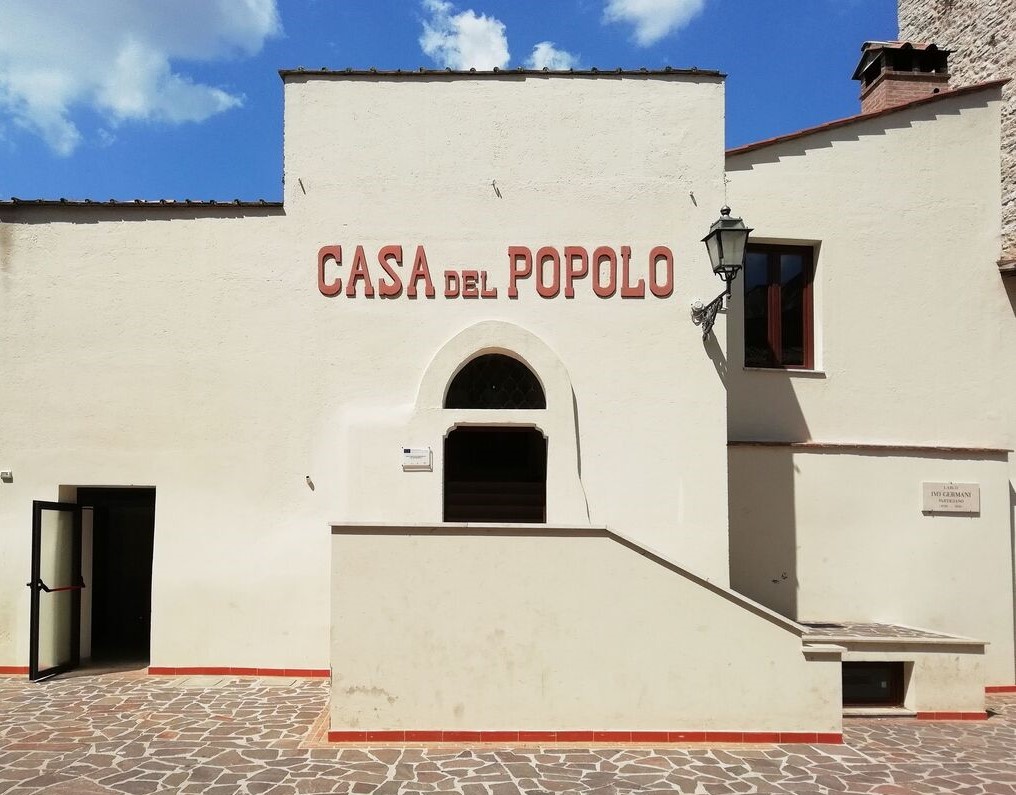
The PCI deeply values the role of culture in Italian society. Throughinstitutions like the People’s Houses (Case del Popolo) and left-wing cultural platforms such as L’Unità and Rinascita, PCI disseminated socialist values to reshape the ideological landscape of Italian society. Guided by Gramsci’s concept of cultural hegemony, the PCI sought to secure its leadership in the ideological sphere. This received support from intellectuals, including filmmakers Roberto Rossellini, Pier Paolo Pasolini, and the writer Italo Calvino. Additionally, PCI-controlled local councils pioneered policies such as family doctor systems, universal healthcare pilots, and preschool support, which served as blueprints for later phase national policies.
In the 1960s, cities under PCI’s control, such as Bologna, allocated 40—50% of their budgets to social services. This budget significantly surpassed the 20—30% of Christian-Democratic-controlled cities like Padua and Bari. In Emilia-Romagna, by 1975, approximately 80% of healthcare centers were co-managed by cooperatives or municipal authorities, indirectly under PCI influence. Following the establishment of regional governance in 1970, Emilia-Romagna pioneered Italy’s first regional healthcare system (Servizio Sanitario Regionale). The model directly shaped the 1978 national healthcare reform (Servizio Sanitario Nazionale, SSN). Union membership in the PCI-aligned CGIL grew from roughly 4 million in the 1950s to 5.5 million by 1975, with over 70% from enterprises or regions supported by the PCI. In education, PCI-controlled municipalities achieved over 60% in preschool coverage rates in the 1970s, far exceeding the national average of 35—40%.
Even if excluded from the core of state power, the historical facts demonstrates that the PCI utilized its extensive mass base, robust union networks, local governance strengths, and cultural leadership. Leveraging these, it served as a decisive force in shaping Italy’s welfare state and securing labor rights. The PCI played a decisive role in laying the foundations of the welfare system, advancing workers’ protections, and structurally reshaping the balance of power between labor and capital.
In the 1970s, the PCI confronted intensifying economic crises, surging worker movements, and widespread social unrest. Seeking a political breakthrough and greater influence at the national level, the PCI proposed the “Historic Compromise” (Compromesso Storico), a strategy to forge alliances with centrist parties, like the Christian Democrats, to secure social stability and space for gradual reforms. However, the 1978 kidnapping and assassination of Aldo Moro by the ultra-left Red Brigades exposed the inherent fragility of cross-class political cooperation. I laid bare the acute intensification of social contradictions. Consequently, the “Historic Compromise” faltered, losing the possibility of realization in the ensuing years as it failed to reconcile the deepening divides within Italy’s volatile political landscape.
Concurrently, gigantic shifts in the international landscape dealt a devastating blow to the Italian Communist Party (PCI). The rigidity of the Soviet model and the collapse of communism in Eastern Europe not only undermined the ideological foundations sustaining the PCI but also triggered profound internal divisions over strategy, identity, and future direction. Amid the Soviet disintegration in 1991, the PCI announced its “de-communization,” transforming into the social-democratic Democratic Party of the Left (PDS). This marked the end of the PCI as a traditional communist party. A minority faction, insisting on the ideological orthodoxy of PCI, formed the Communist Refoundation Party (Rifondazione Comunista Italiana). CRP continued to be a marginal political force outside the parliamentary system.
This historical phase encapsulates the Italian Communist Party’s (PCI) trajectory: from a broadly mobilized anti-fascist revolutionary force, to an institutionalized left-wing parliamentary actor, and ultimately to its dissolution into an ideologically marginal entity. It unveils the structural predicament of modern communist parties, caught between the pressure of capitalist parliamentary systems and that of shifting global power dynamics.
The communist parties struggled to sustain revolutionary zeal and organizational vitality. Throughout this process, capitalism employed a “gecko’s tail” strategy---conceding limited welfare rights to defuse social tensions---effectively neutralizing radical left momentum. The achievements of the workers’ movement were absorbed into institutional frameworks, and class antagonisms were dulled by administrative and negotiatory mechanisms. Consequently, the left, caught in prolonged parliamentary struggles, gradually lost its structural mobilizing base and historical sense of direction.
At a deeper level, the issue resides in the capitalist democratic structure itself, which is far from the neutral, universal, and egalitarian facade it presents. Just like Jacques Rancière’s words, democratic practice often functions as a technique of governance, operating through the “distribution of the sensible” (le partage du sensible) to systematically exclude the genuine political agency of the majority.
The so-called “will of the people” emerges not as a product of free expression but as a passive signifier within meticulously engineered discursive frameworks and institutional spaces. Western European left-wing parties, even amid increasing popular support, fail to seize the core of state power. It is not due to procedural malfunctions in democracy, but because these procedures inherently contain a logic of exclusion against forces of radical transformation from their inception.
This excluding logic extends beyond the political realm, embedding itself deeply within the asymmetrical structures of economic power in the global capitalist system.
As the postwar Italy witnessed, the United States, via the Marshall Plan, offered “economic aid” that forge a systemic dependency of Italy’s fiscal, trade, and military spheres on the U.S. This dependency curtailed the space for an independent politics the PCI supports. Moreover, it forced the nation’s policymaking to comply with the interests of international finance capital and transnational monopolies.
In this situation, economic hegemony and political dominance are not discrete but form a combined repressive logic: the U.S. sustains its ruling structure by extracting value from Third World nations (resources, labor, markets), only to “aid” them in return. Aid, a rhetoric not merely echoing traditional colonialism but constituting the common grammar of contemporary capitalist global domination.
Henceforth, Maoism’s strategic principles are not historically contingent. They are fundamental responses to the global structural oppression.
First, the dictum “political power grows out of the barrel of a gun” is not an abstract fetishization of armed violence. It is a recognition of the state’s essence as an apparatus of class oppression.
Second, the institutional arrangement of one-party leadership with multi-party participation does not negate democracy; rather, it serves to safeguard national sovereignty and class independence against the domination of the capitalist world system. In the context of global power asymmetries and persistent economic structural oppression, so-called “multi-party parliamentary democracy” readily becomes a conduit for imperialist intervention and political fragmentation. In contrast, the model of one-party leadership with multi-party participation functions as a mechanism to ensure the unity and strategic coherence of the people’s state. This helps fulfill the mission of preserving socialist political autonomy under the pressures of global capitalism.
Precisely in this sense, the failure of the Italian Communist Party (PCI) is not an isolated case but a microcosm of the broader disintegration, passive adaptation, and ultimate dissolution of Western European left-wing movements within the structures of capitalist democracy and global hegemonic systems.
It reminds us of a critical lesson. Any effort to advance a socialist revolution in a single region through parliamentary means will fail, if it does not reshape the system of mass mobilization and address global structural inequalities. Such an approach will gradually lose its revolutionary character and political momentum. In the end, it will only become another part of the system’s legitimacy.
It ends up being integrated as part of the ruling system’s legitimacy. In contrast, Maoism, with its strategic initiative, integrated approach to state power, and profound grasp of international capitalism’s essence, continues to offer contemporary revolutionary forces a robust ideological framework and practical reference for resisting global capitalist domination.